Art
I am a disabled queer, nonbinary writer, artist, organizer, and arts worker based in the greater Boston area. I work in fiber arts, documentary photography, data visualization, journalism, and narrative storytelling. My work explores themes of disability, chronic illness, queerness, gender, in/visibility, sexual violence, justice, and equity. My current body of work in progress is a series of conceptual self-portraits aimed at making my so-called invisible disabilities/chronic illnesses visible, via stylized photographic self portraits, fiber art data visualization, and symptom management objects transformed into faux-luxury items.
Resume
2026-2027 Sustaining Practice Grant, Collective Futures Fund and Tufts Art Galleries | Measured in Stitches: Fiber Art, Disability, and Lived Data. Grant made possible by the Andy Warhol Foundation for the Visual Arts, the Barr Foundation, and Wagner Foundation.
EXHIBITIONS
2026 Juried Group Exhibition | T3%+!le$ - The Language of Fiber, Schweinfurth Art Center, in partnership with Surface Design Association and Auburn, New York. Juror: Diana Weymar.
2026 group exhibition | Repeat After Me, Open Doors Gallery, Worcester Art Museum, Worcester, MA.
2025-2026 Juried Group Exhibition | Fay Chandler Emerging Artist Show, City Hall, Boston, MA. Jurors: Luisa Castellanos, Powell Fine Art Advisory; Amor Diaz-Campos, Boston Public Art Triennial; Gabrielle Domb.
2013 Group Exhibition | The Practice of Space, Northeastern University’s Gallery360, Boston, MA. Curated by Andrea Raynor and Luis Brens.
CURATION
2026 “Held in Tension” — Caleb Hawkins
Free-standing, large-scale conceptual light installation in honor of Black History Month. 2026, East Wing Gallery, Chelsea City Hall, Chelsea, MA
SELECT EXPERIENCE
December 2025 - PRESENT | City of Chelsea, MA — Manager of Arts, Culture, and the Creative Economy
2022 - present | Freelance fine art writer
Publications include ARTnews, Artnet, Boston Art Review, Art Duesseldorf Magazine, and the art section of Observer.
July 2024 - January 2026 | ShowUp Gallery, Boston, MA — Development and Operations Manager
April - November 2025 | Boston Public Art Triennial — Public Art Ambassador; Hub Manager
EDUCATION
September 2019 - August 2021 | Northeastern University, Boston — Master of Science in Media Advocacy
Summa cum laude; Joint program of NU School of Law & School of Journalism.
September 2007 - May 2012 | Northeastern University, Boston — Bachelor of Arts in International Affairs
Magna cum laude; Minors in Political Science, Global Social Entrepreneurship, Latin American Studies, Middle East Studies
Fiber Art Data Visualization
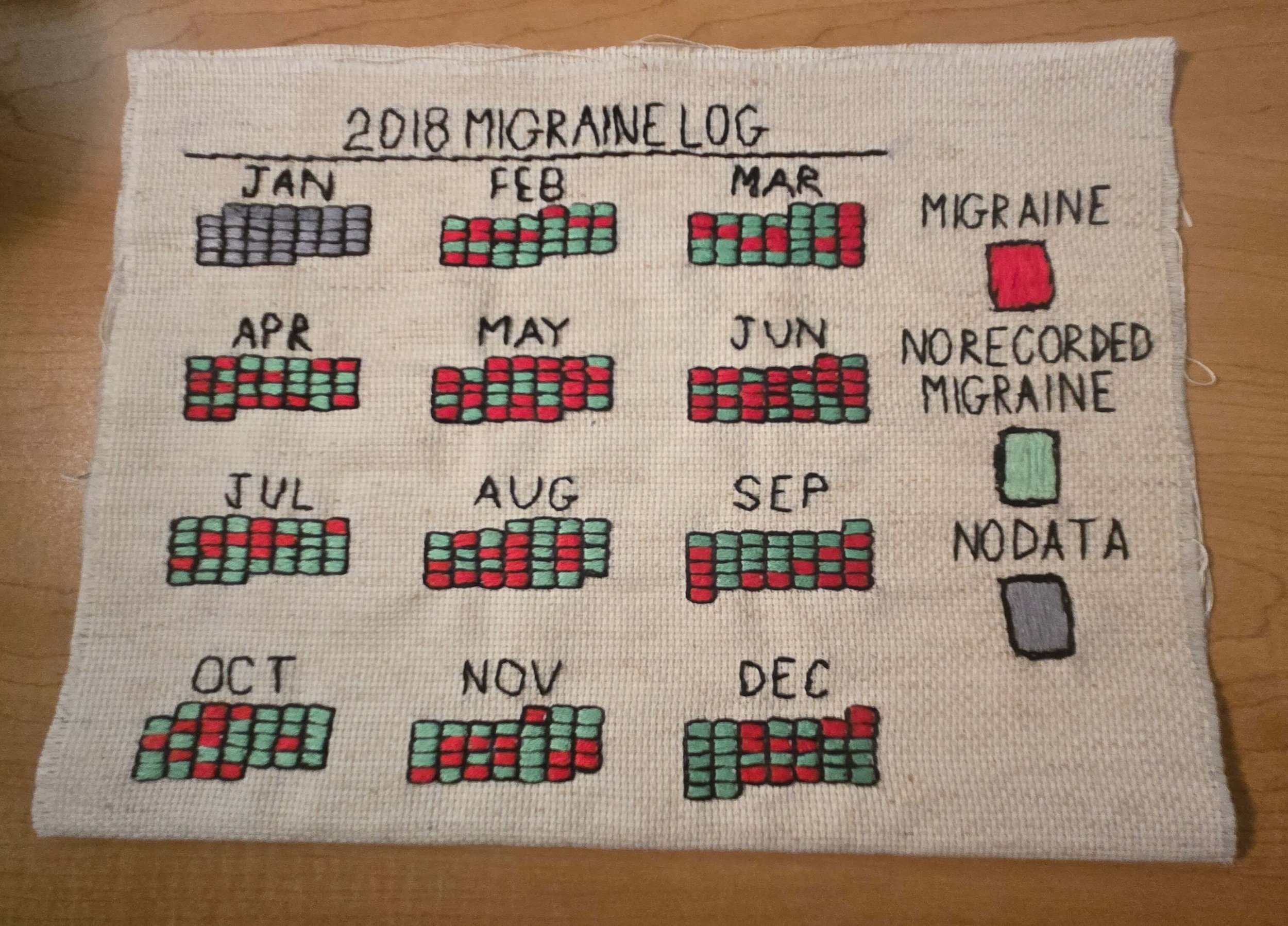

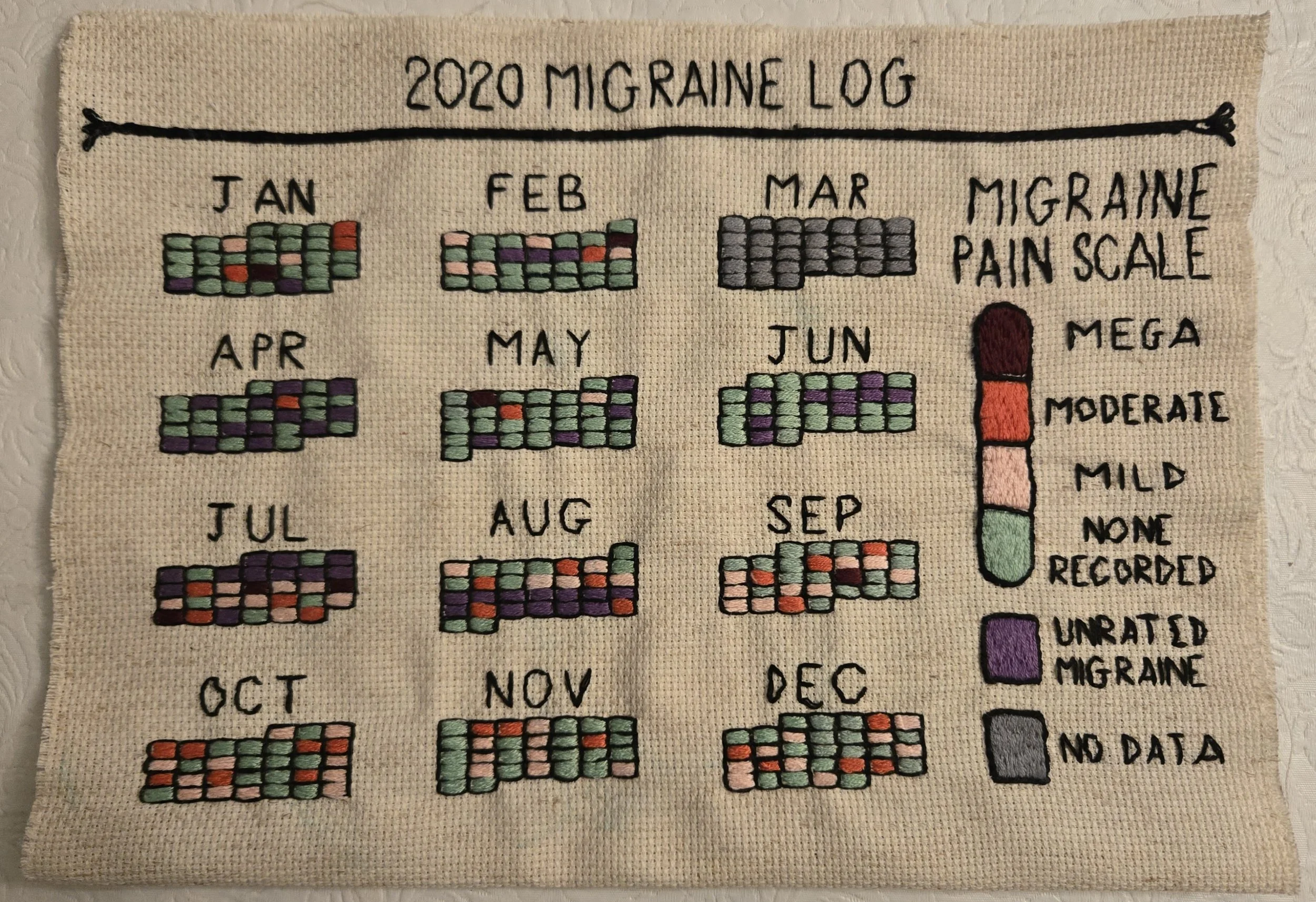
The Pain Scale is Bullshit But It's All We've Got series (2025-present)
Inspired by temperature blankets and adapted from a photo of a pattern from LittleSideStitches on Etsy, each entry in the series shows a calendar year, with migraine dates marked in a red color gradient from light pink to deep maroon, from low pain to high, contrasting with a soothing green for days without migraine.
Embroidered Photography
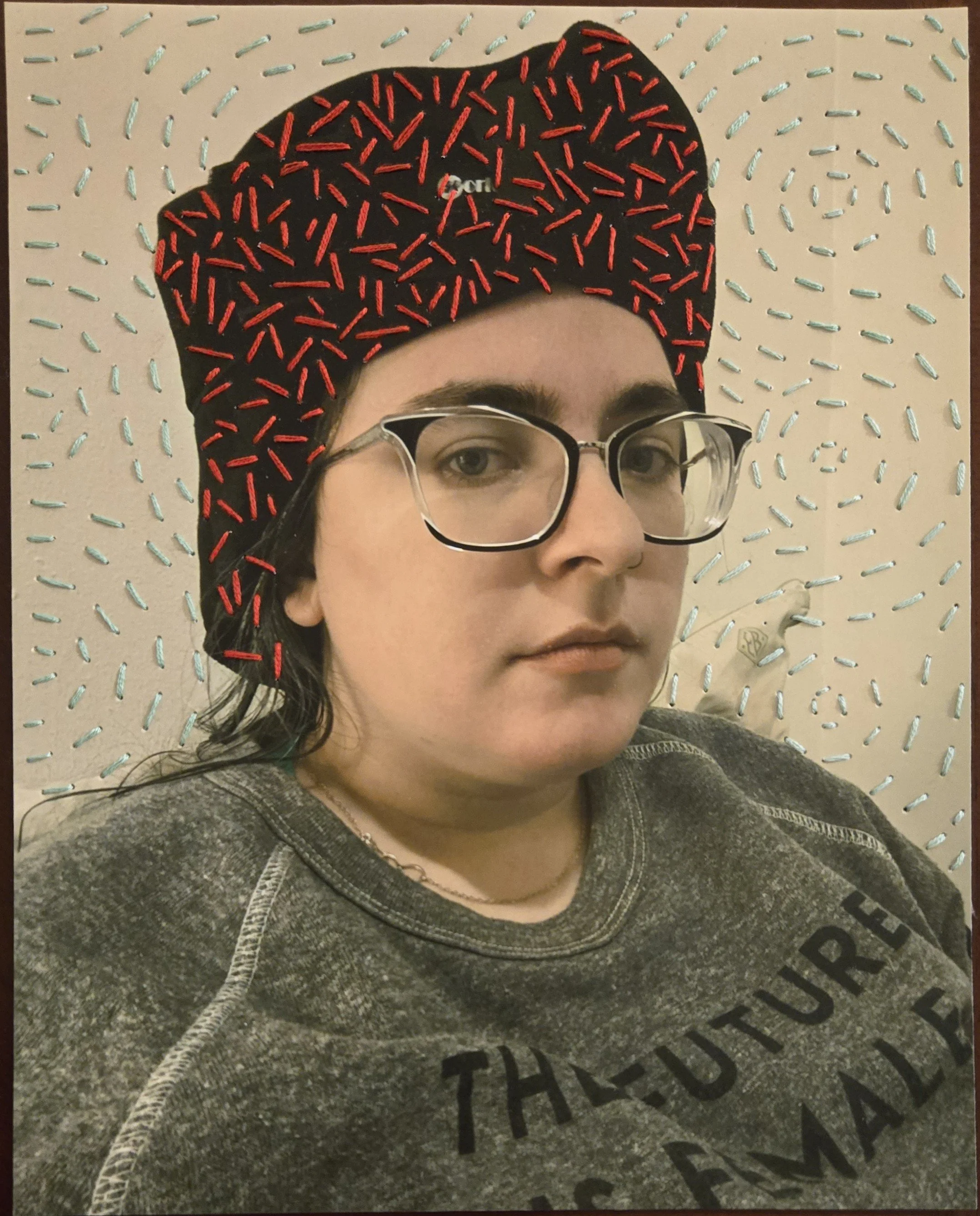
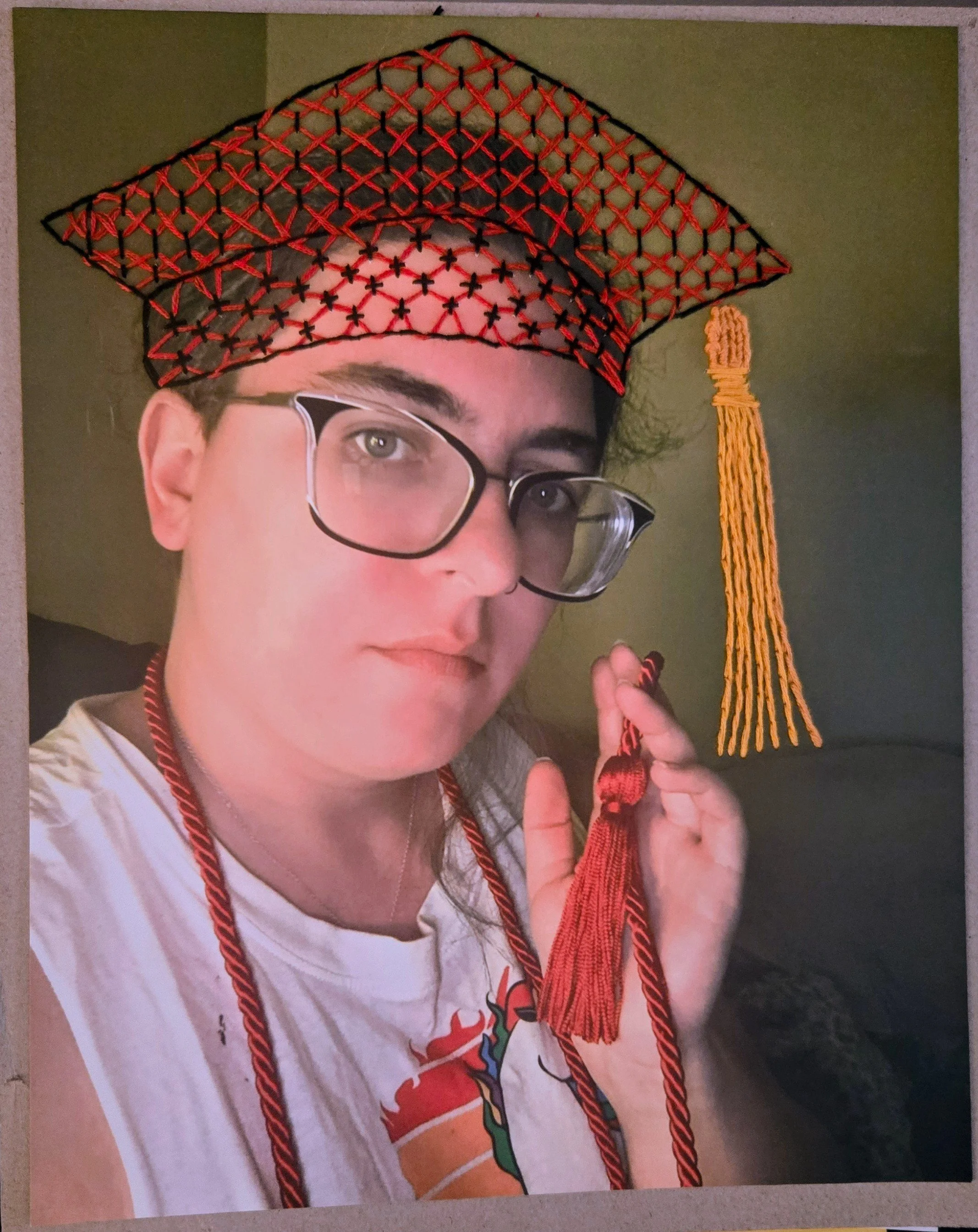
Brain Storm (2026) and Master of Science in Media Advocacy, summa cum laude (2026)
These portraits marry my photography with hand embroidery, using sashiko stitching techniques. Sashiko is a Japanese type of visible mending used by working class people. It is not merely beautiful decoration; it strengthens the garment while cutting down on waste. More than just utilitarian, it is also beautiful; everyone deserves beauty in their everyday lives. As a disabled person, I am perpetually mending my physical and mental self.